How Long Does a Water Heater Last? (Lifespan, Warning Signs, and When to Replace)
Most water heaters don’t fail on a perfect schedule—but they do follow predictable patterns. If you know the typical lifespan and the early warning signs, you can avoid the “no hot water” surprise, prevent water damage, and plan a replacement before it becomes an emergency.
Below is a clear breakdown of average water heater lifespan, what shortens it, how to recognize end-of-life symptoms, and the simple rule that usually decides repair vs replacement.
Typical Water Heater Lifespan
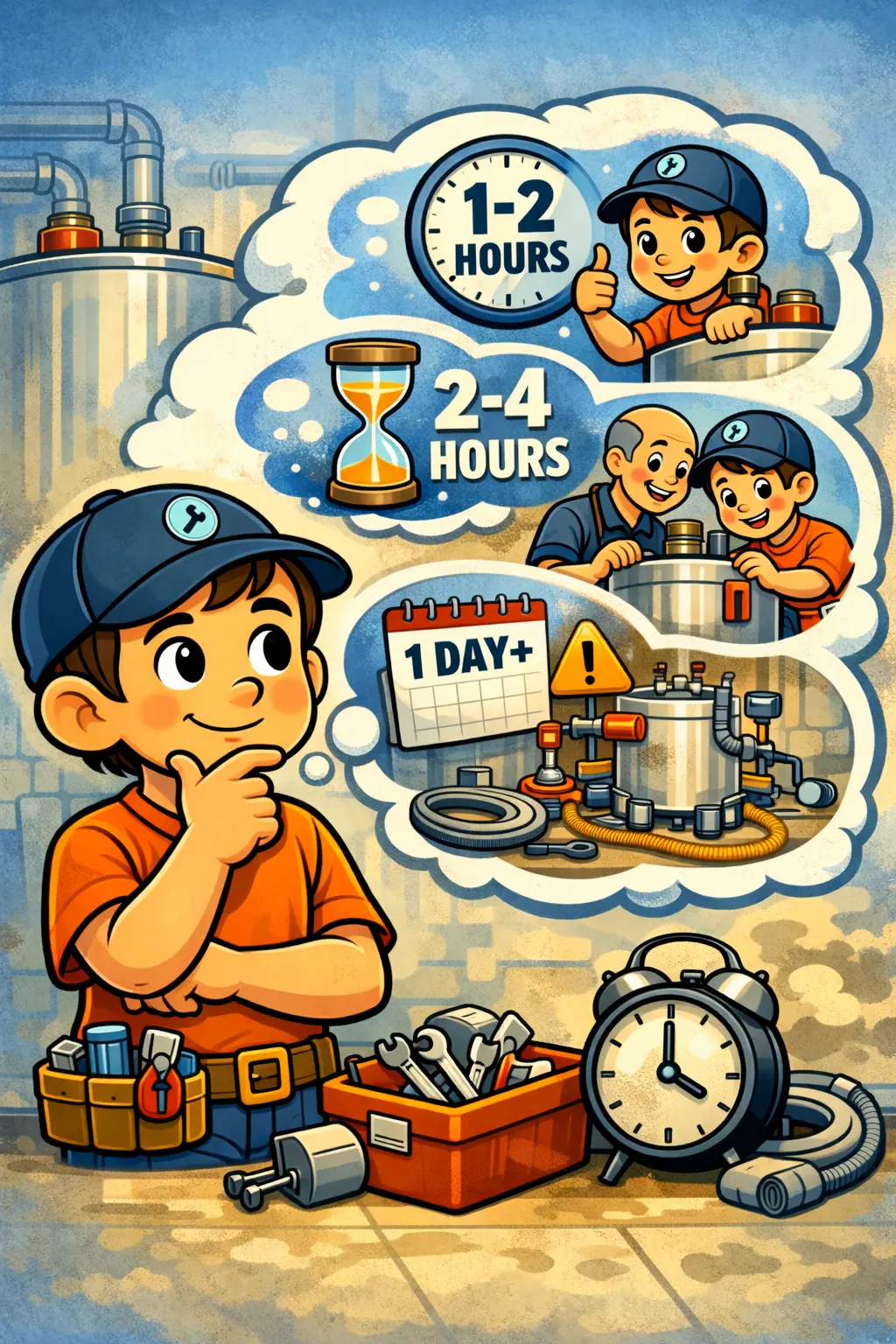
Lifespan varies based on water quality, usage, installation quality, and maintenance—but these are common ranges:
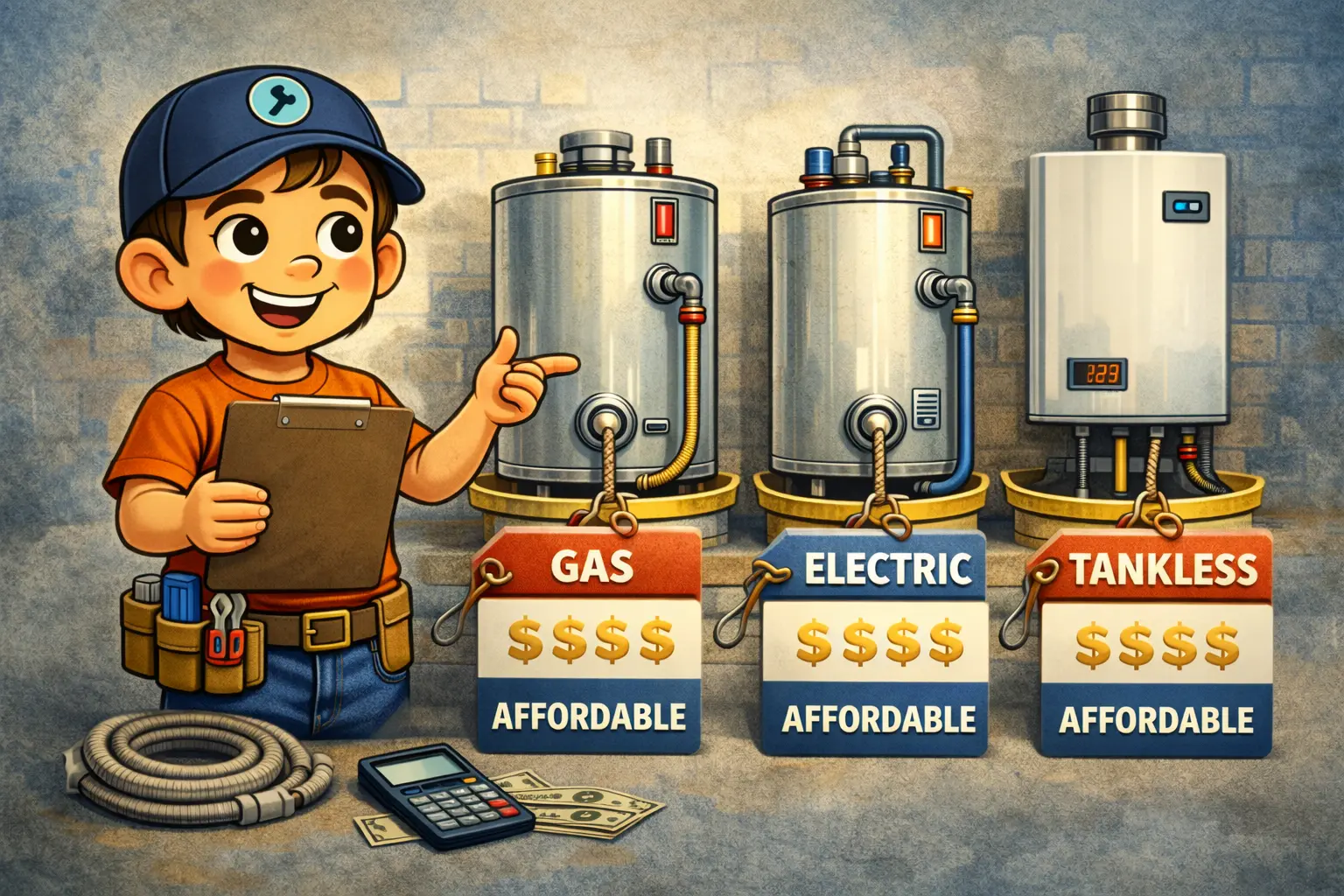
- Tank water heaters: often around 8–12 years
- Tankless water heaters: often longer with proper maintenance
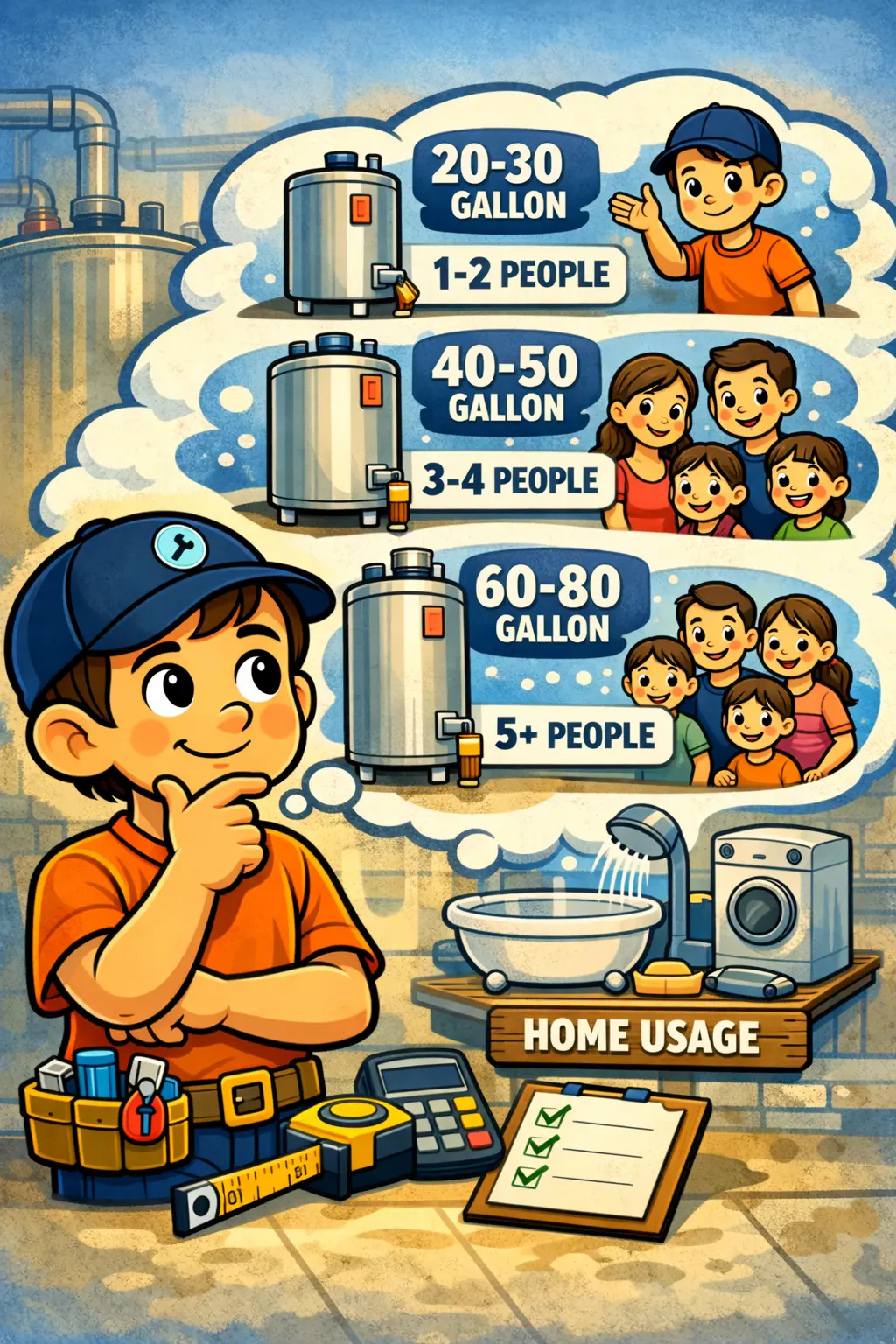
Important note: a “newer” unit can still fail early if it’s undersized, installed poorly, or dealing with heavy sediment. If you’re unsure whether your heater is sized correctly, read: Water Heater Sizing Guide.
What Shortens a Water Heater’s Life
Water heaters usually wear out from a combination of heat stress, corrosion, and water quality issues. These factors speed up failure:
1) Heavy sediment buildup
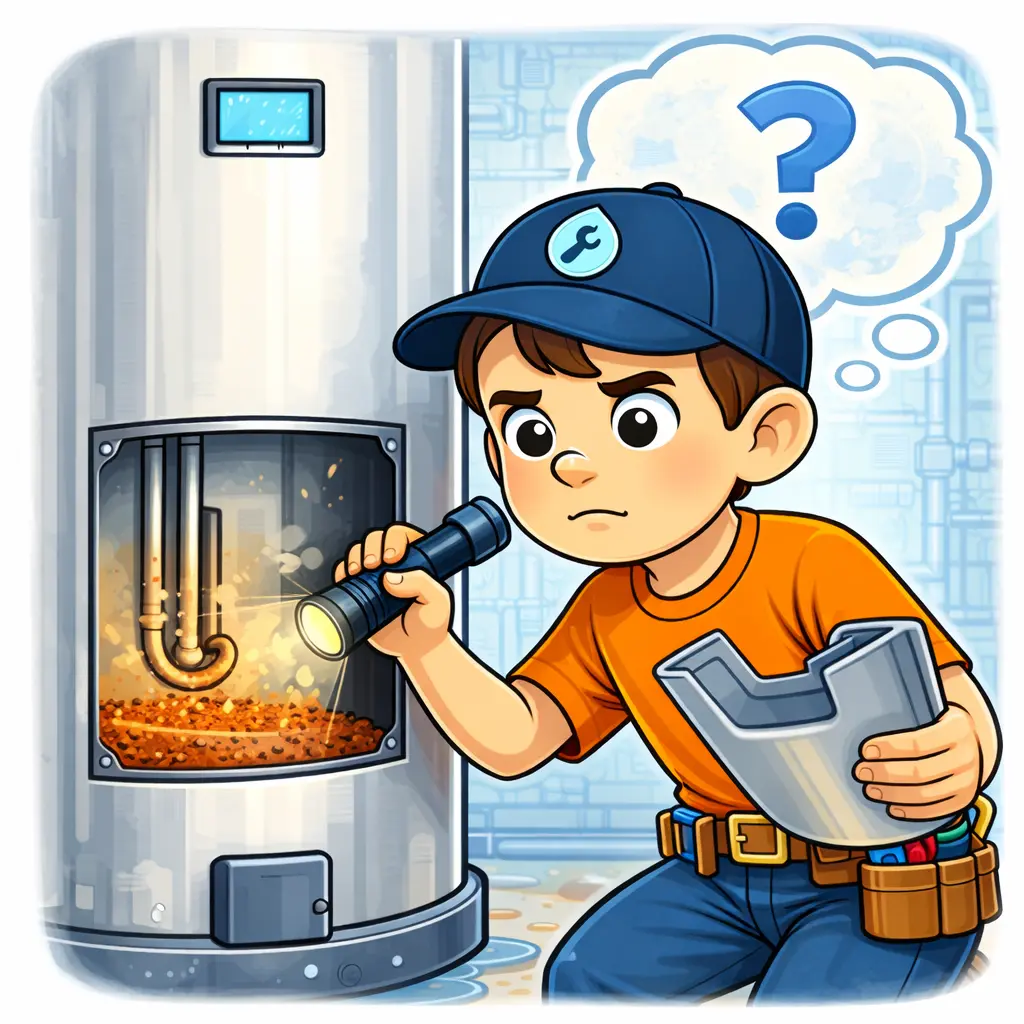
Sediment acts like an insulating layer. The heater works harder, runs hotter, and can develop popping/rumbling noises. Over time, this reduces efficiency and can shorten lifespan. Learn the symptoms here: Water Heater Sediment Symptoms.
2) Rust and corrosion over time
Corrosion is one of the most common reasons tank water heaters eventually fail. Once the tank shell is compromised, reliability drops quickly.
3) High usage and constant demand
Larger households and heavy hot-water use increase wear. That doesn’t mean you must “oversize,” but it does mean your unit should be correctly sized and performing properly. If your home runs out of hot water often, this helps: What Size Water Heater Do I Need?.
4) Skipped maintenance
Maintenance isn’t just about efficiency—it’s about preventing early failure. Flushing (when appropriate), monitoring sediment symptoms, and keeping settings reasonable can add years to a unit’s life.
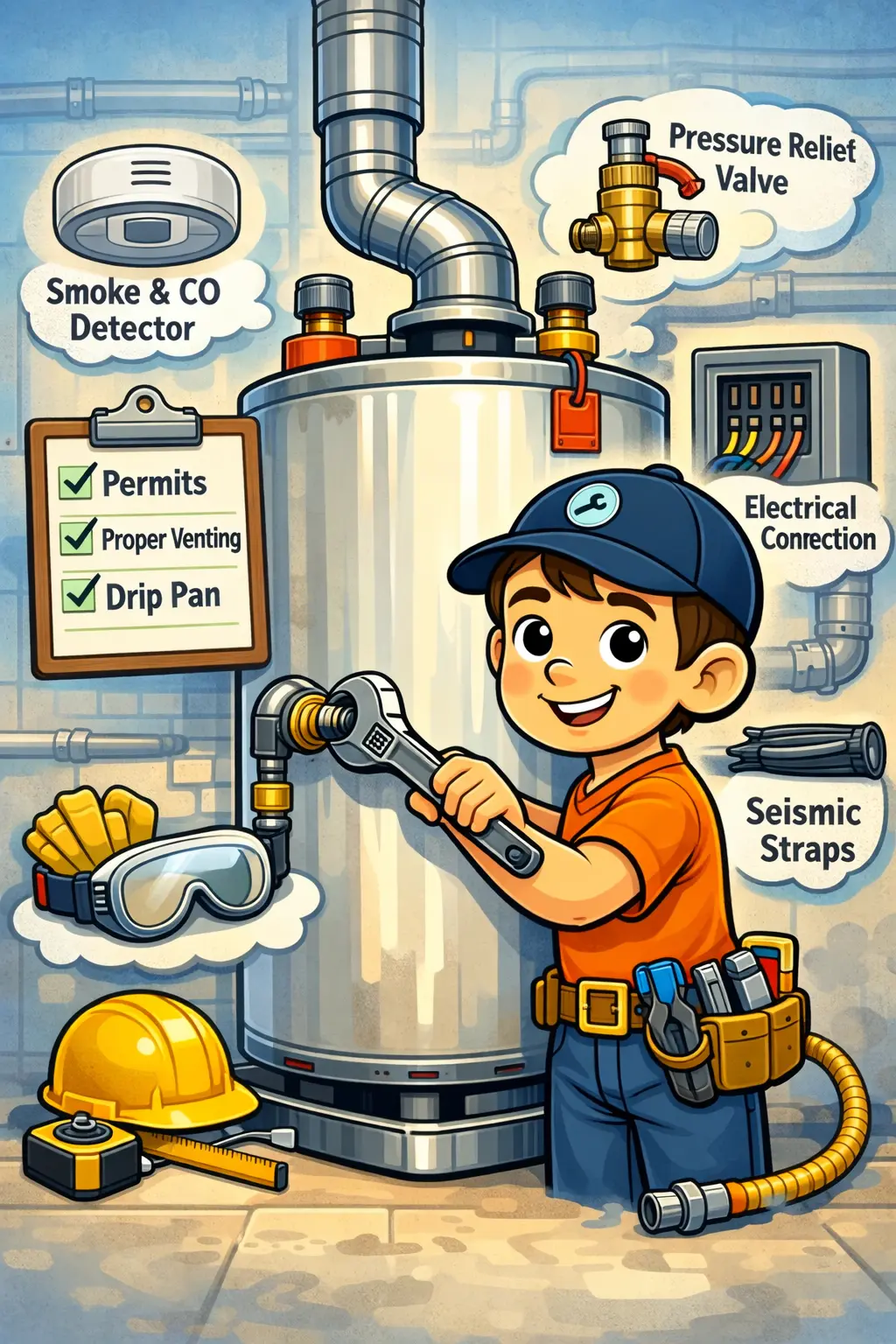
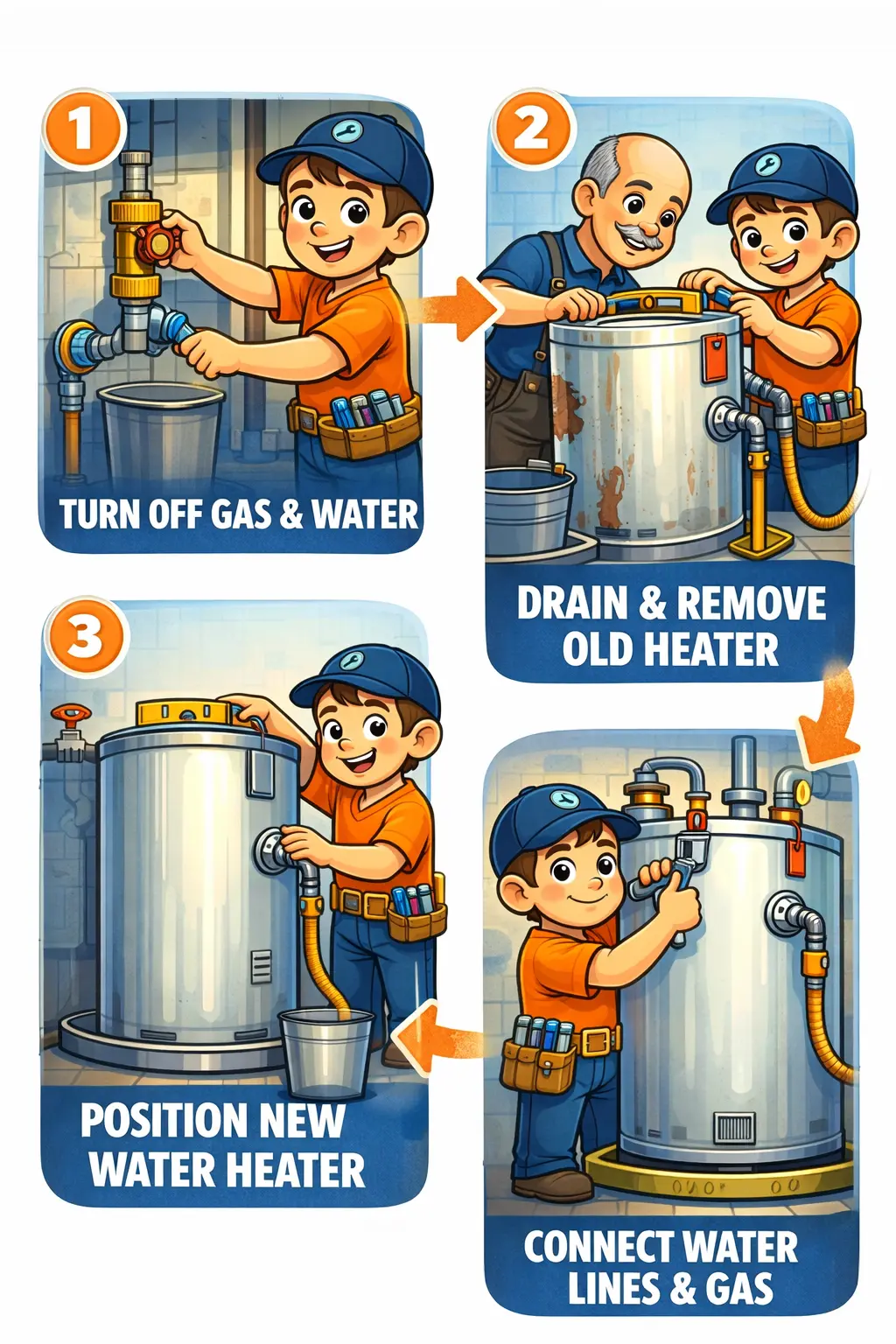
Installation quality also matters. A clean, verified install reduces stress on the unit and helps prevent leaks: Water Heater Installation Checklist and Water Heater Installation Process.
Signs Your Water Heater Is Nearing End-of-Life
Most units give warning signs before they fail completely. If you notice multiple symptoms below, it’s smart to plan ahead instead of waiting for a full breakdown.
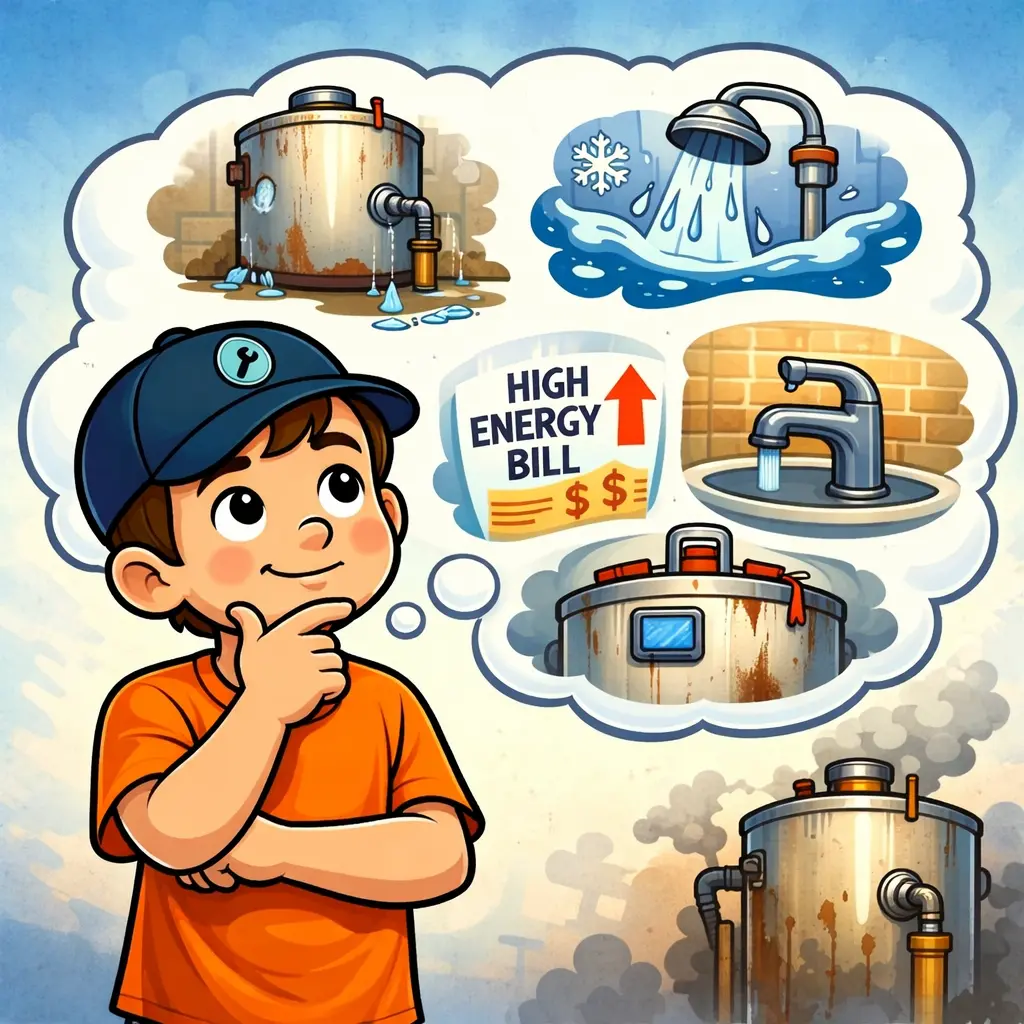
- Hot water runs out faster than it used to
- Temperature swings during showers (hot/cold fluctuations)
- Popping or rumbling noises (often linked to sediment)
- Rust-colored water or a metallic smell
- Moisture around the base or fittings (especially recurring moisture)
For a deeper “replace now vs soon” list, see: Signs You Need a New Water Heater.
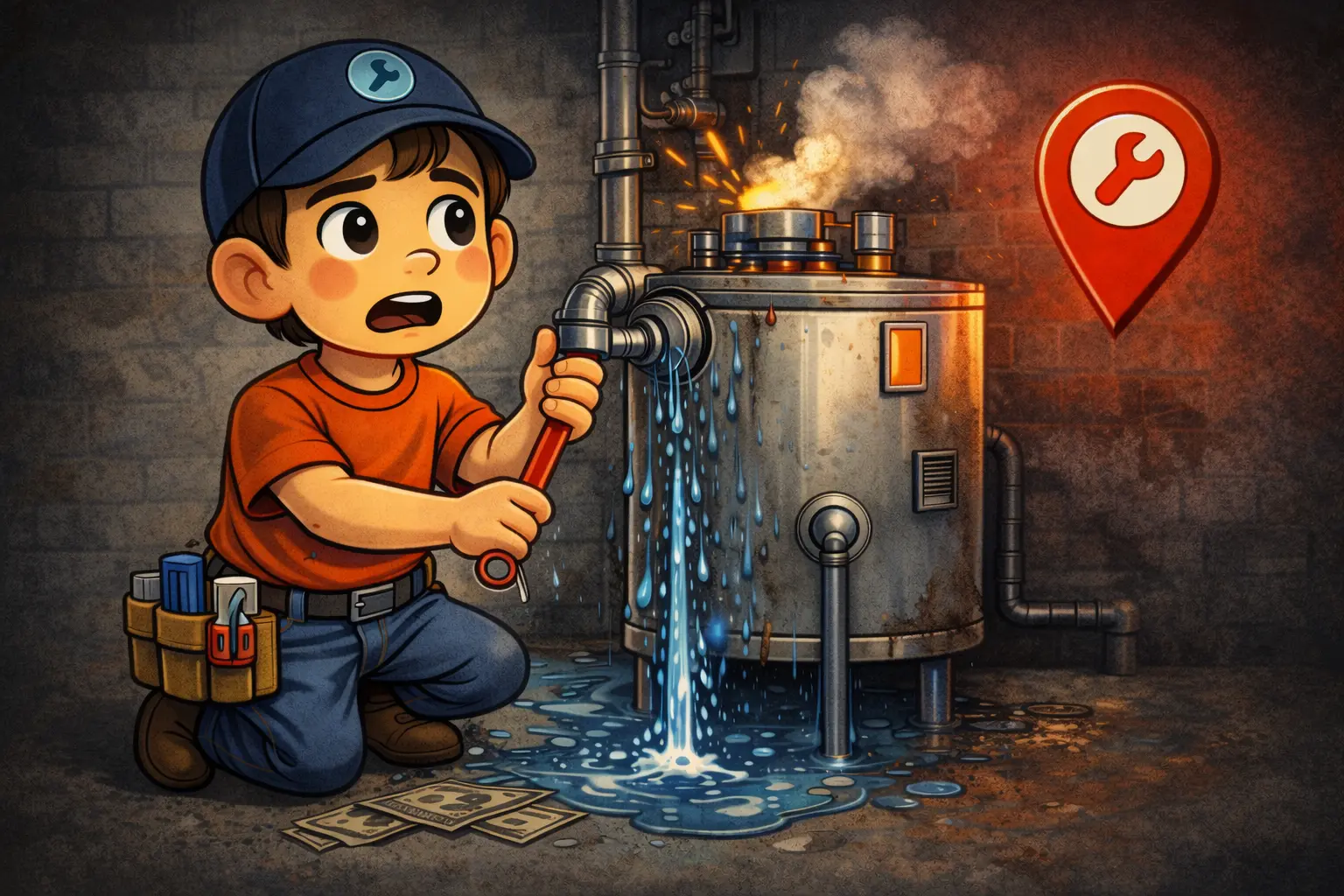
If you’re seeing active leaking, don’t wait—start here: Water Heater Leaking: What to Do.
The Most Important Rule: If the Tank Is Leaking, Replacement Is Usually the Right Move
If the tank shell itself is leaking, replacement is typically the best decision. A leaking tank cannot be “patched” in a reliable way. You may be able to slow it temporarily, but it’s not a dependable fix—and it risks water damage.
This is different from a leak at a fitting or valve. Some leaks can come from connections or components, which may be repairable. But a tank leak is a very strong “replace” signal.
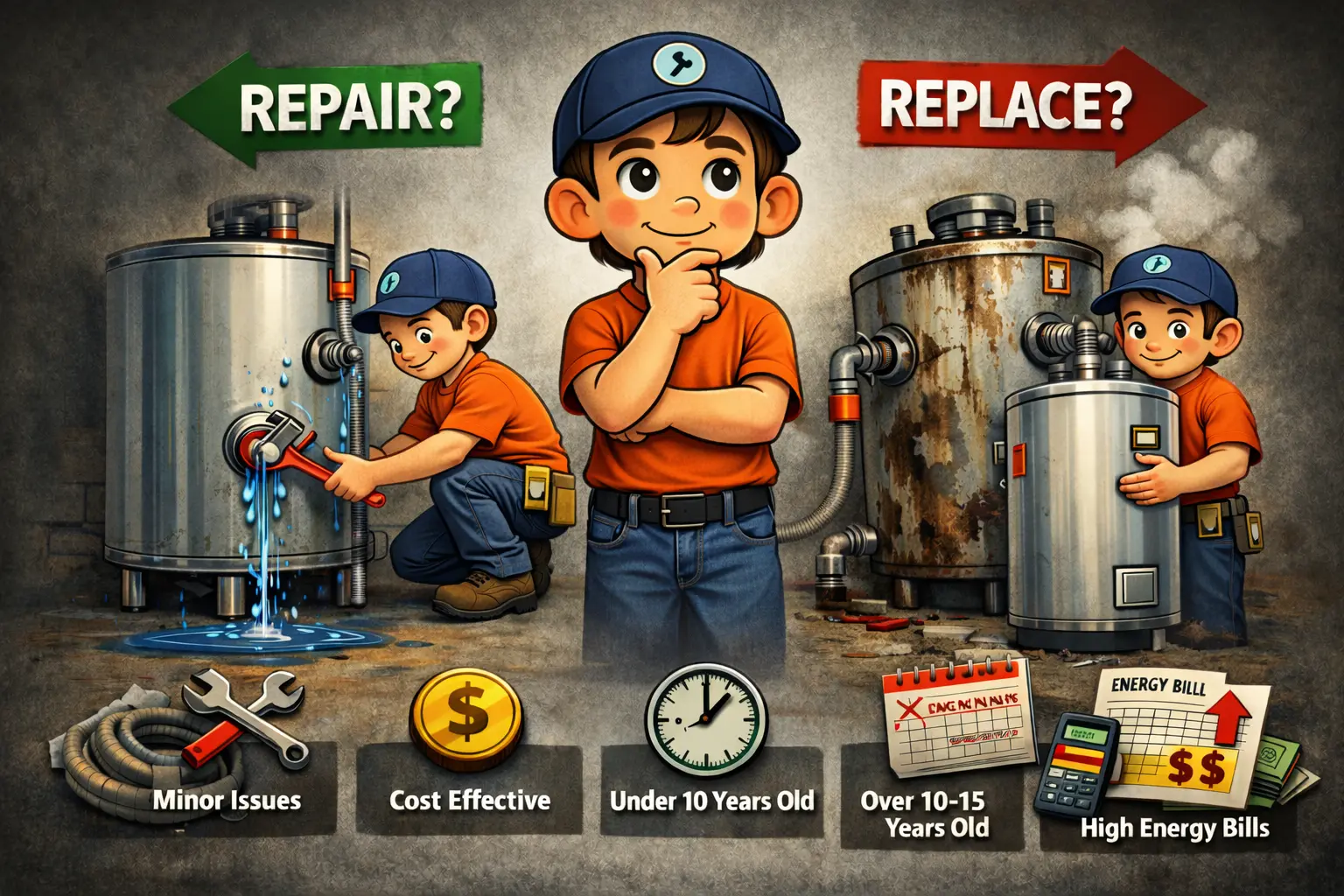
Repair vs Replacement: A Simple Decision Framework
If you’re trying to decide whether to repair or replace, here’s a straightforward way to think about it:
Repair may make sense when:
- The unit is newer
- It is not leaking from the tank
- The problem is a clear component failure (and everything else is in good shape)
Replacement is usually smarter when:
- The unit is older (especially approaching the typical lifespan range)
- There are multiple symptoms happening at once
- There is any tank leak risk or visible corrosion at the base
For the full breakdown, read: Water Heater Repair vs Replacement.
How to Make Your Water Heater Last Longer
You can’t stop time, but you can reduce stress on the system. Here are practical ways to extend lifespan:
- Watch for sediment signs early and address them (noise, slow recovery, temp swings)
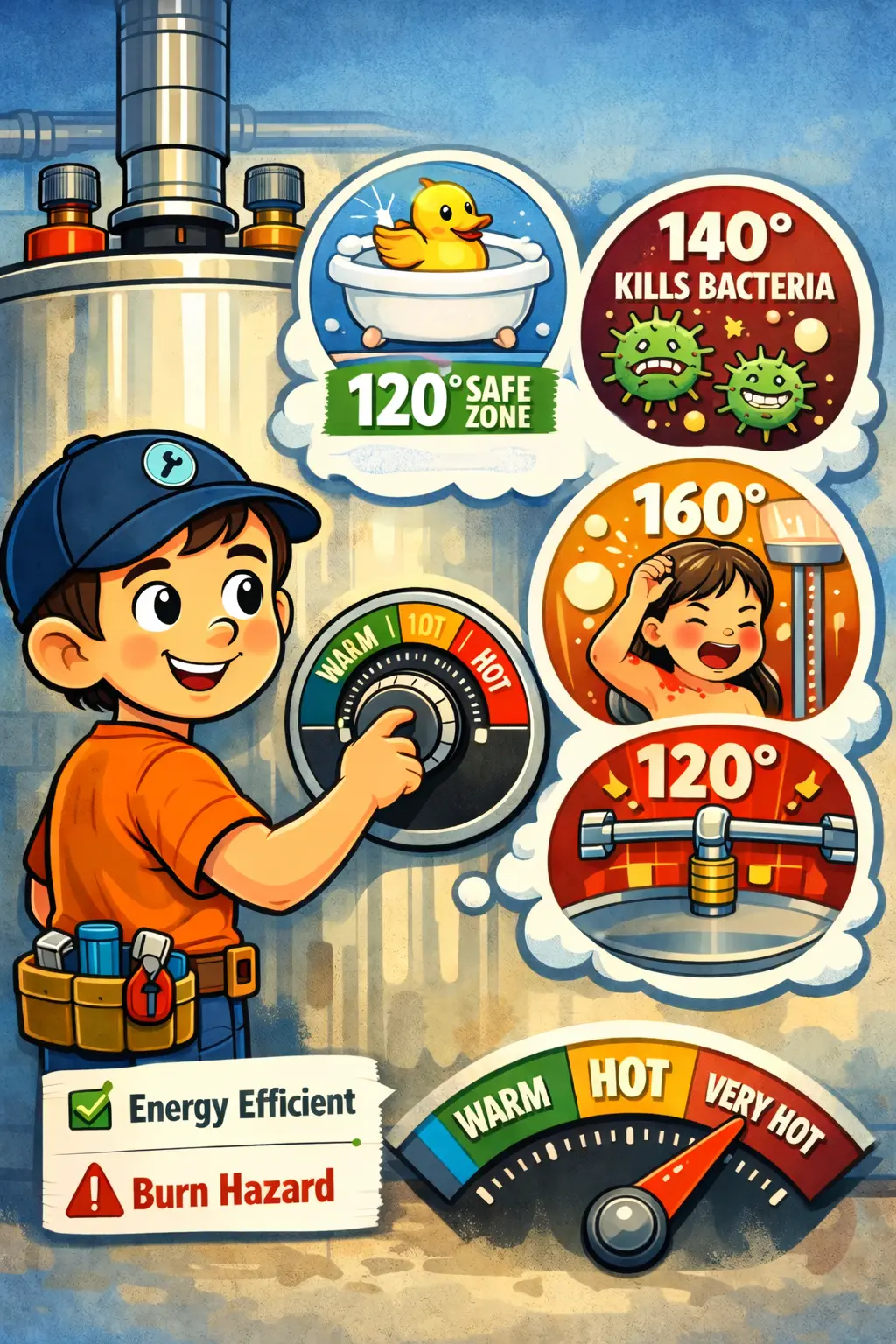
- Keep temperature settings reasonable (too high increases wear and risk)
- Schedule maintenance if performance changes (especially in areas prone to sediment)
- Install correctly with verified startup and leak checks
Temperature guidance here: Water Heater Temperature Settings.
Related Guides & Next Steps
Helpful reads
- Repair vs Replacement
- Signs It’s Time to Replace
- Sediment Symptoms
- Water Heater Leaking: What to Do
- Replacement Cost Factors
- Tank vs Tankless