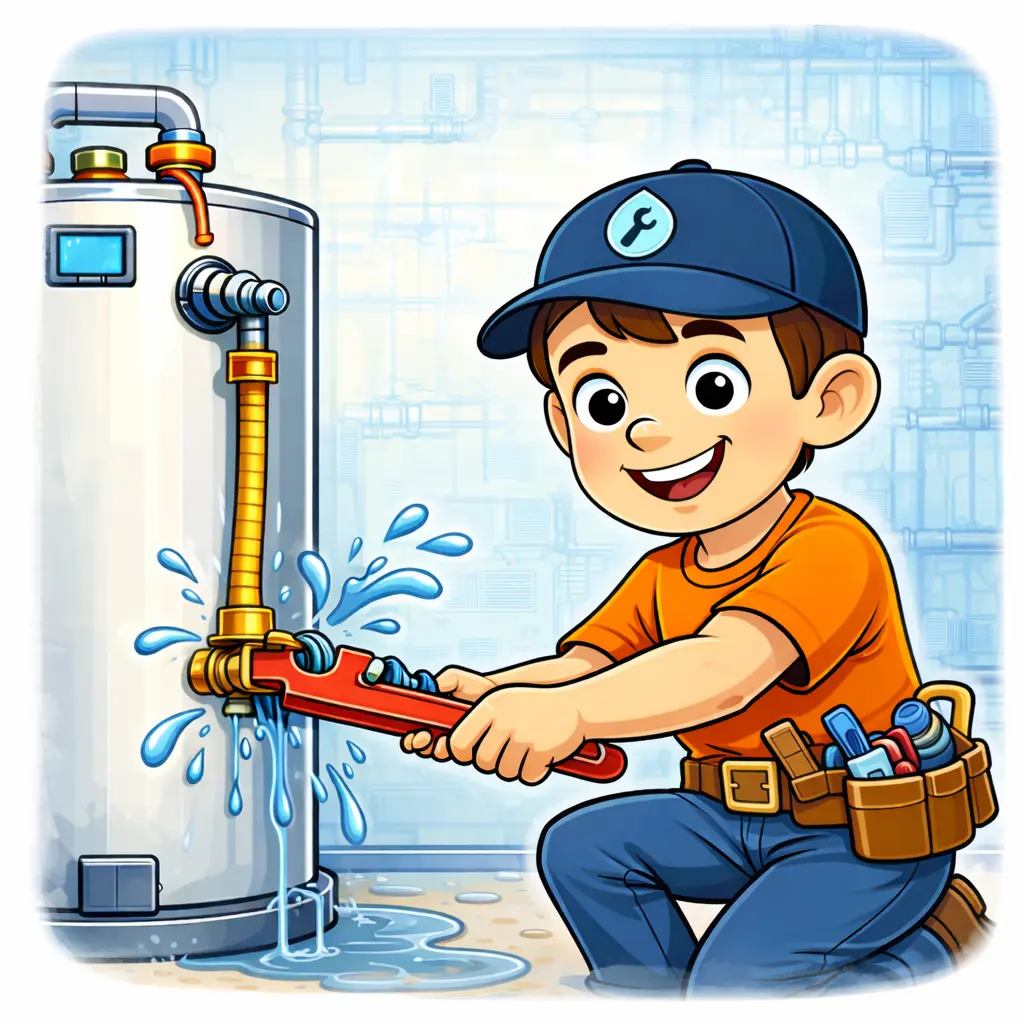
Water Heater Leaking: What to Do (Step-by-Step)
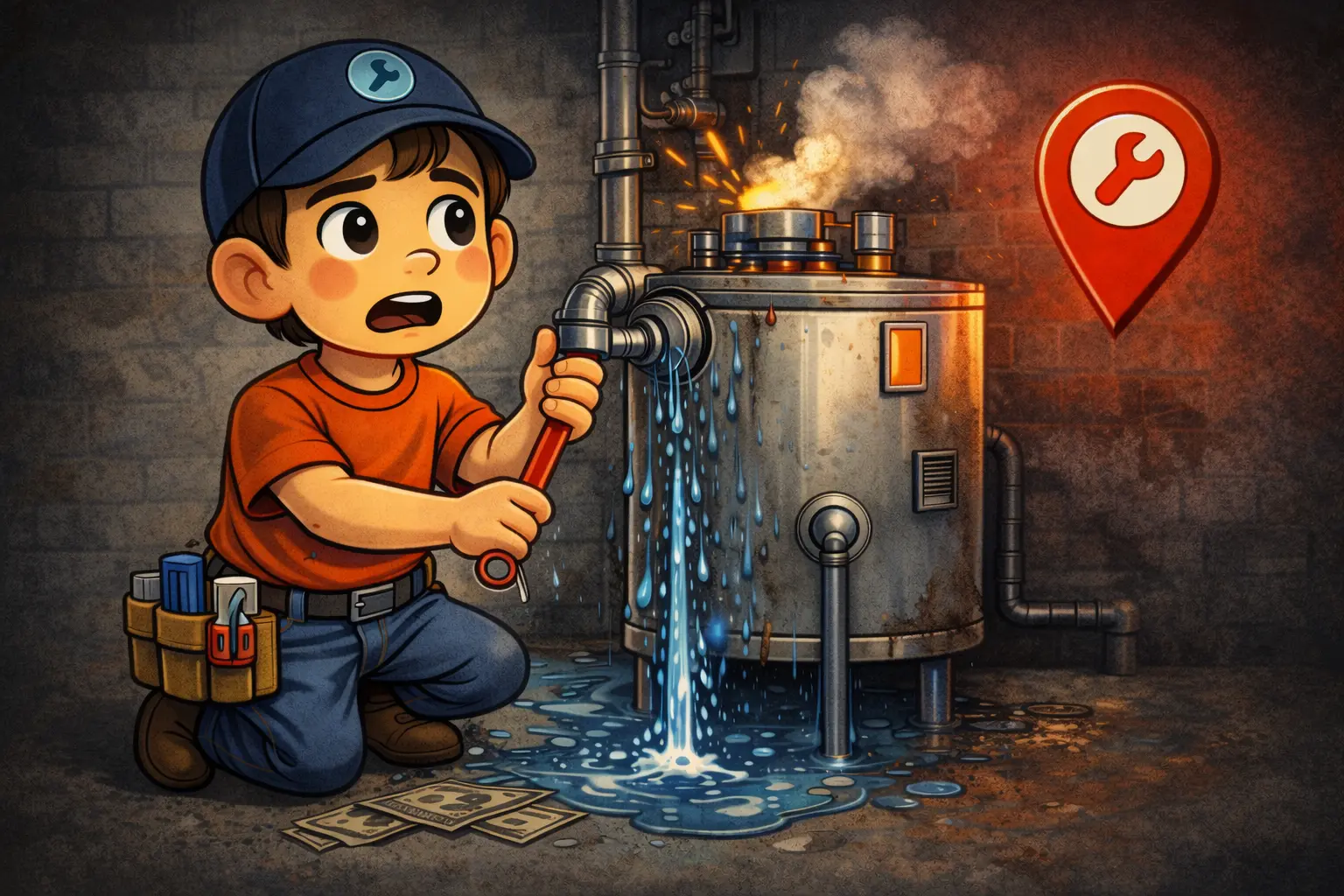
A leaking water heater can go from a “small drip” to major water damage fast. The right move is to stay safe, stop the water, and quickly determine whether it’s a repairable leak (like a fitting) or a tank failure that typically requires replacement.
Use this step-by-step guide to protect your home and make a smart decision—especially if you’re dealing with an active leak right now.
First: Stay Safe
Before you touch anything, keep safety first. Water + electricity (and gas) can be dangerous if handled incorrectly. If you smell gas or suspect electrical hazards, leave the area and contact a professional.
Step 1: Shut down power or gas
- If it’s electric: turn off power to the water heater at the breaker (don’t rely on just the thermostat/dial).
- If it’s gas: turn the gas control to OFF.
If this leak feels urgent or you’re worried about active water damage, visit: What to Do in a Plumbing Emergency.
Step 2: Stop the Water
Your #1 goal is to stop additional water from entering the tank so the leak doesn’t keep feeding itself.
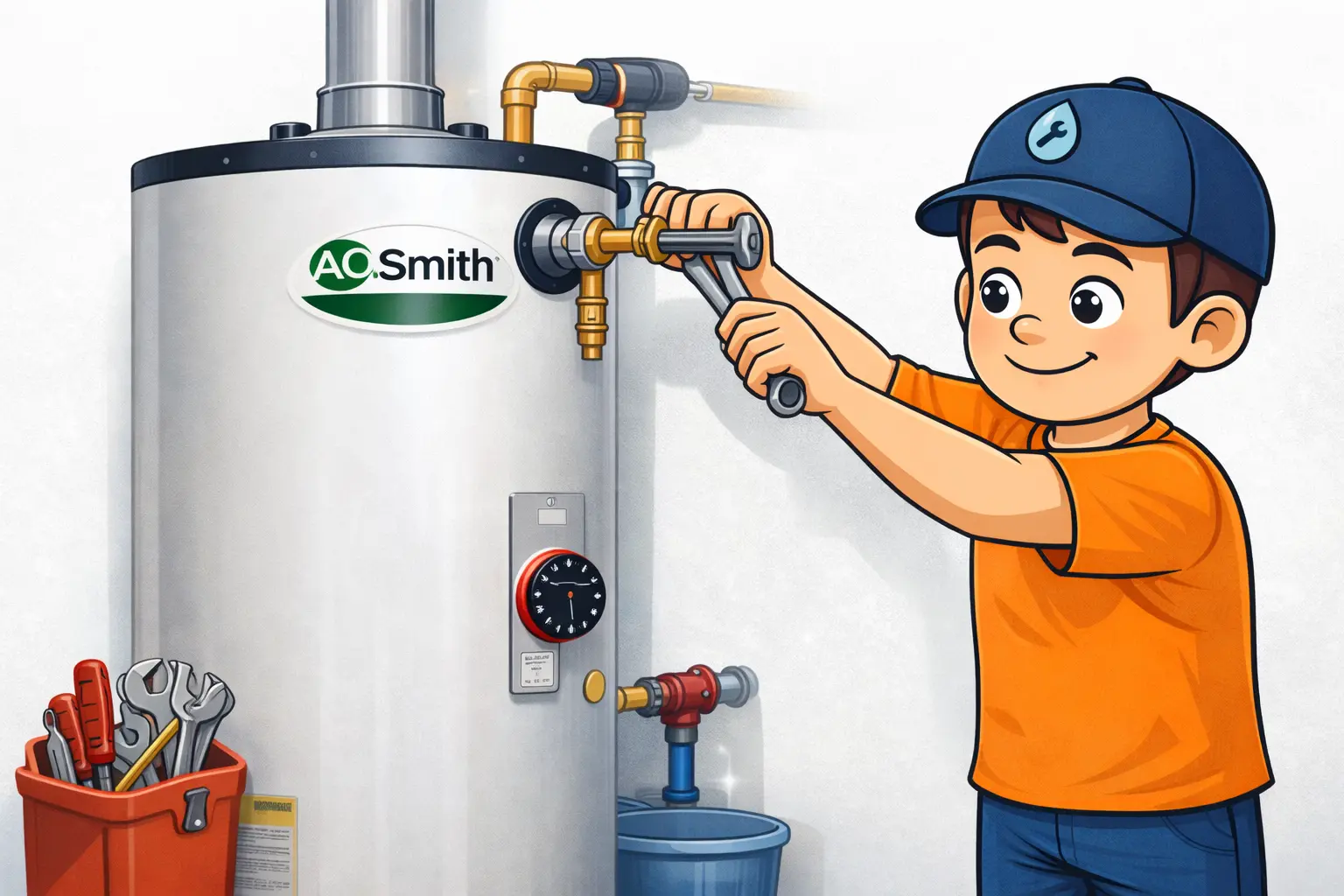
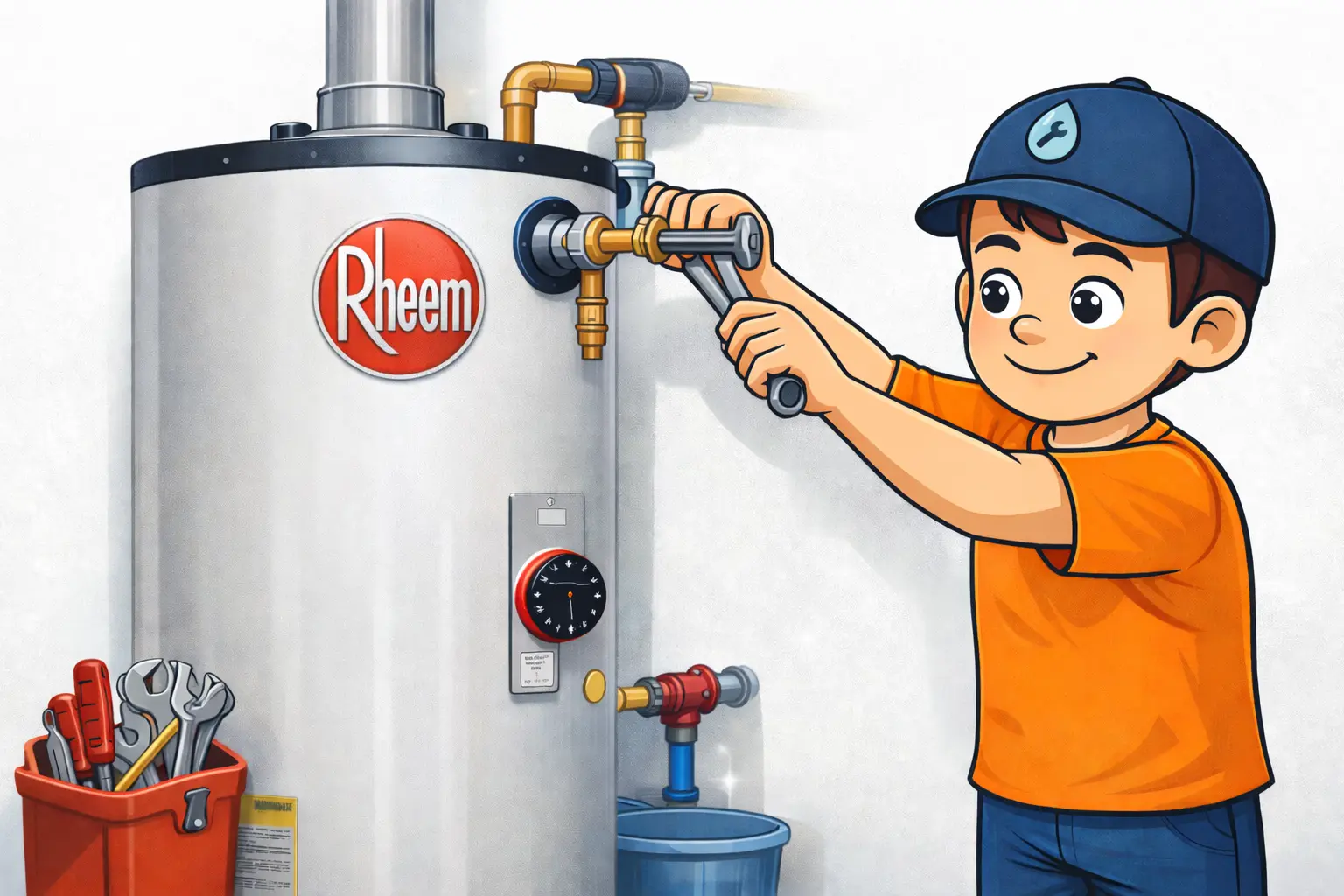
- Shut off the cold water supply to the heater (usually a valve above the unit).
- If you can’t find the valve or it won’t turn, you may need to shut off the water at the main.
If you’re not sure where your shutoff is or your valve needs service, this can help: Water Shut-Off Valve Service (Clearwater).
Step 3: Relieve Pressure (Optional, but Helpful)
After shutting off the cold supply, open a hot water faucet nearby. This can relieve pressure in the system and may slow down some leaks.
- Open a hot faucet in a sink or tub.
- Leave it open briefly to reduce pressure and help the tank settle.
Step 4: Figure Out Where It’s Leaking
Not every leak means the tank is “done.” The leak location tells you whether you might be dealing with a fitting, a safety discharge, or a tank failure.
Common leak spots
- Top connections or fittings: may be a connection issue, loose fitting, or worn part.
- Temperature/pressure relief (T&P) area: may be a discharge/pressure-related issue (not always a tank failure).
- Bottom of the tank: often points to internal tank failure (a major end-of-life sign).
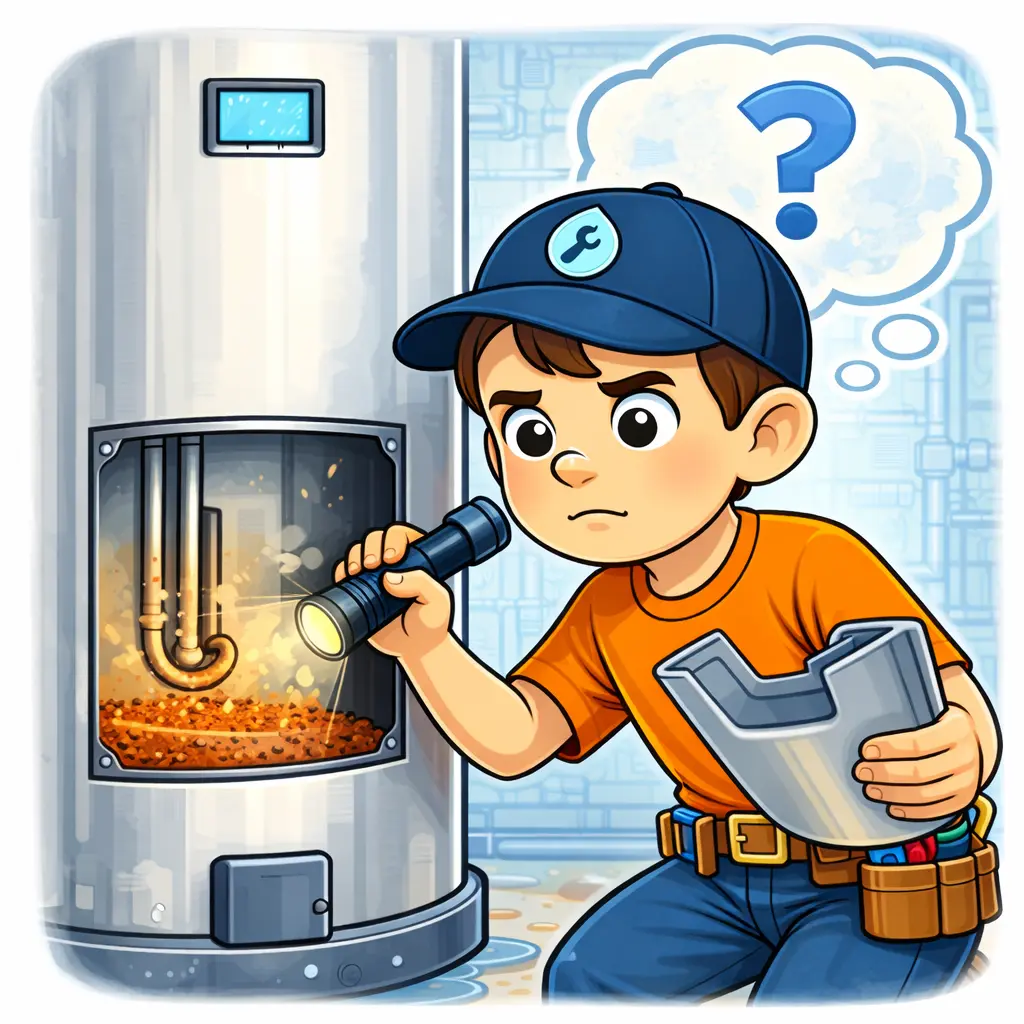
If you’re also hearing popping or rumbling noises, sediment can be part of the story: Water Heater Sediment Symptoms.
When Replacement Is Likely
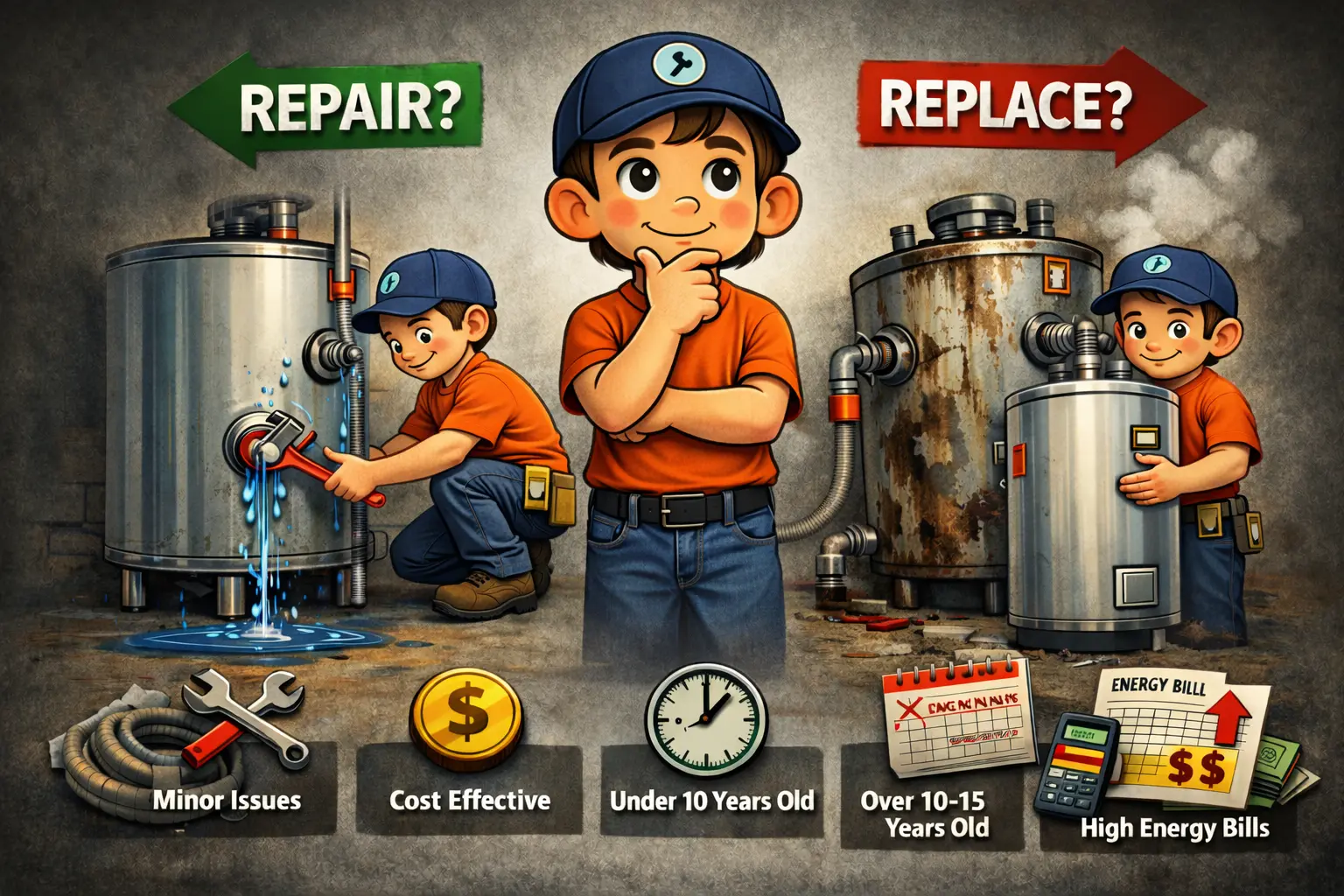
If the tank is leaking from the bottom or you see water pooling around the base, replacement is usually the correct move. A failing tank shell can’t be “patched” in a reliable way.
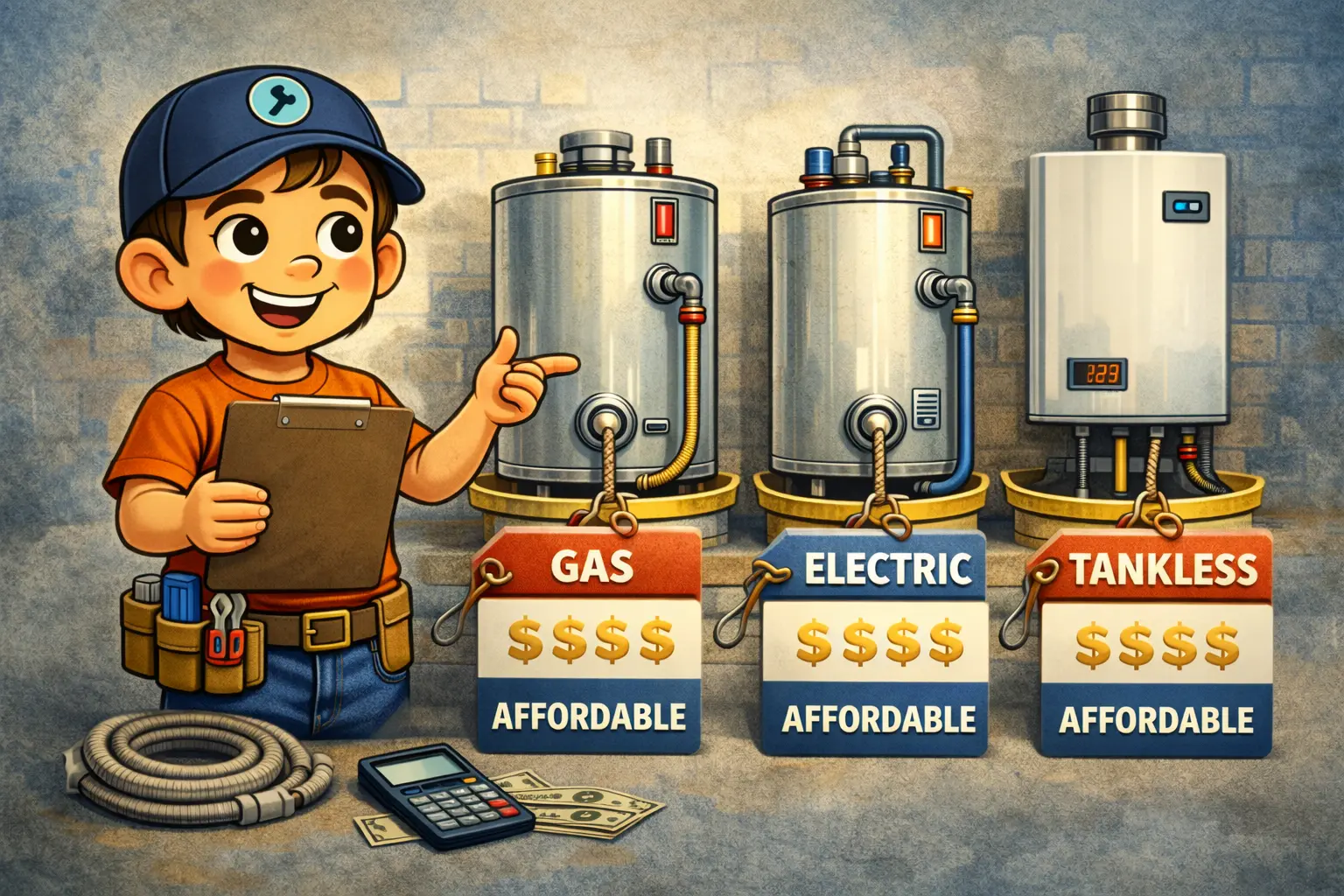
If you’re on the fence, this decision guide helps: Water Heater Repair vs Replacement. And if you want to understand what drives pricing, read: Water Heater Replacement Cost Factors.
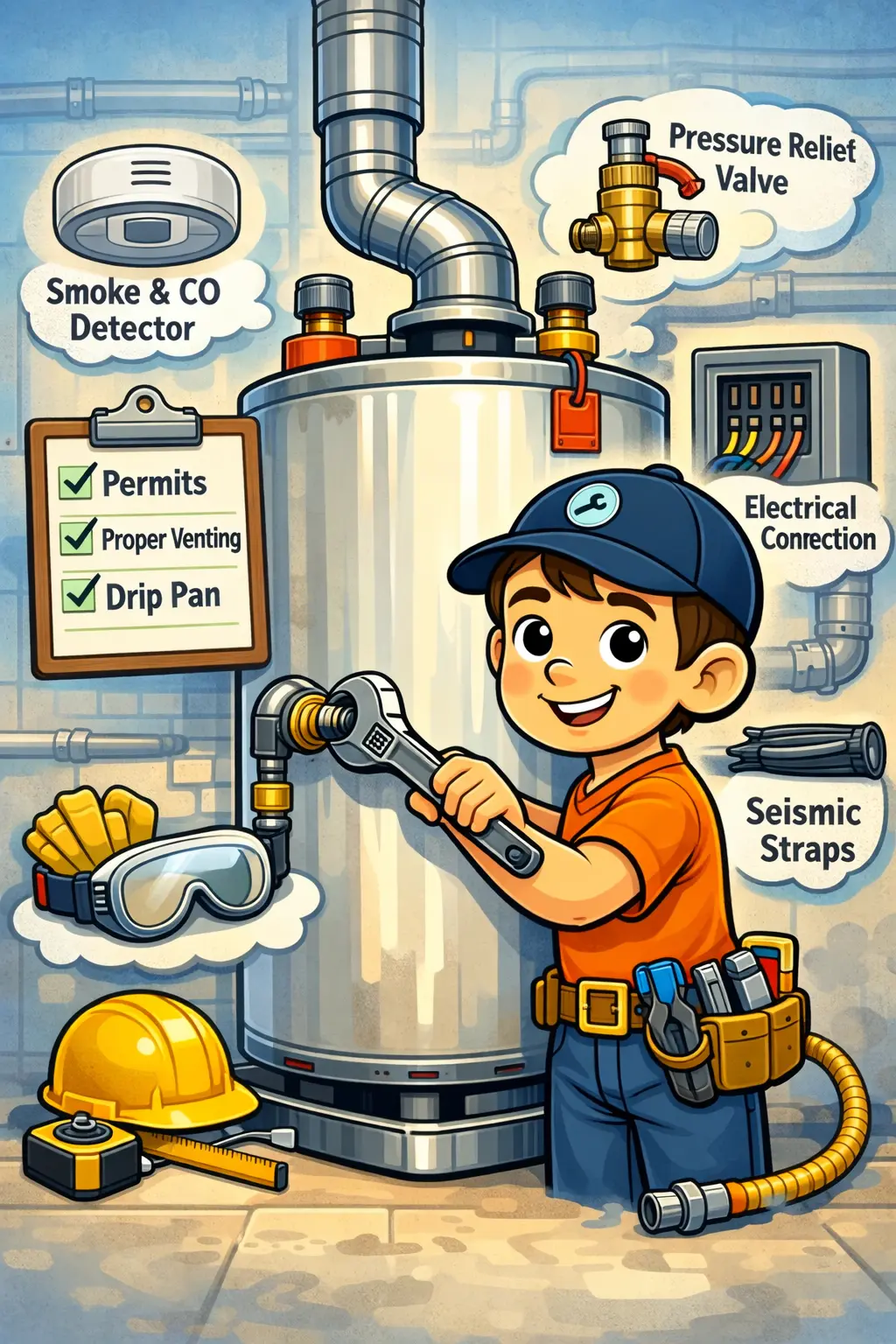
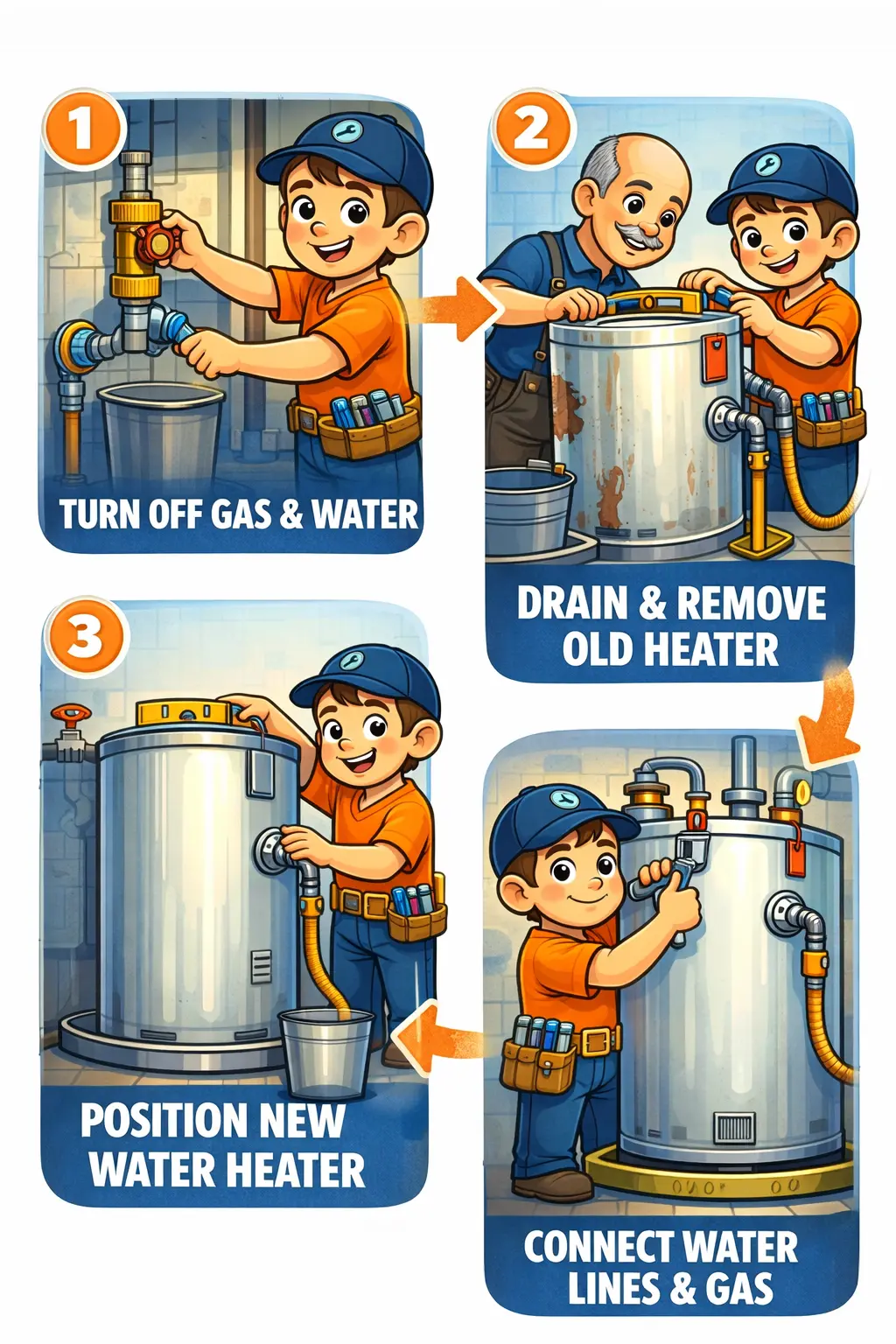
If you’re planning replacement, these pages help you avoid surprises and understand quality install expectations: Installation Requirements and Installation Checklist.
If It’s a Small Leak at a Fitting
A small leak at a fitting may be fixable, but it still needs attention quickly. Water damage adds up—and even a slow drip can cause:
- Drywall and floor damage
- Mold risk
- Corrosion that turns a small repair into a bigger replacement job
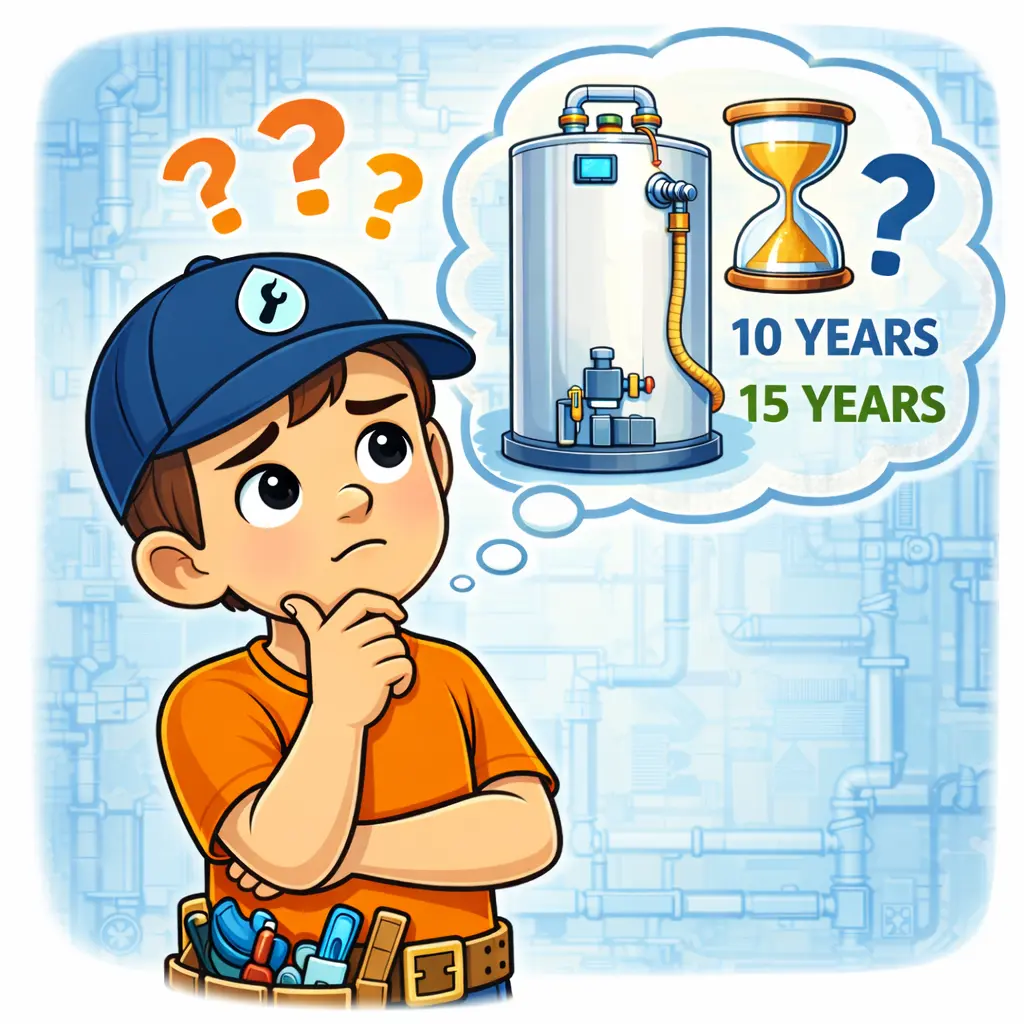
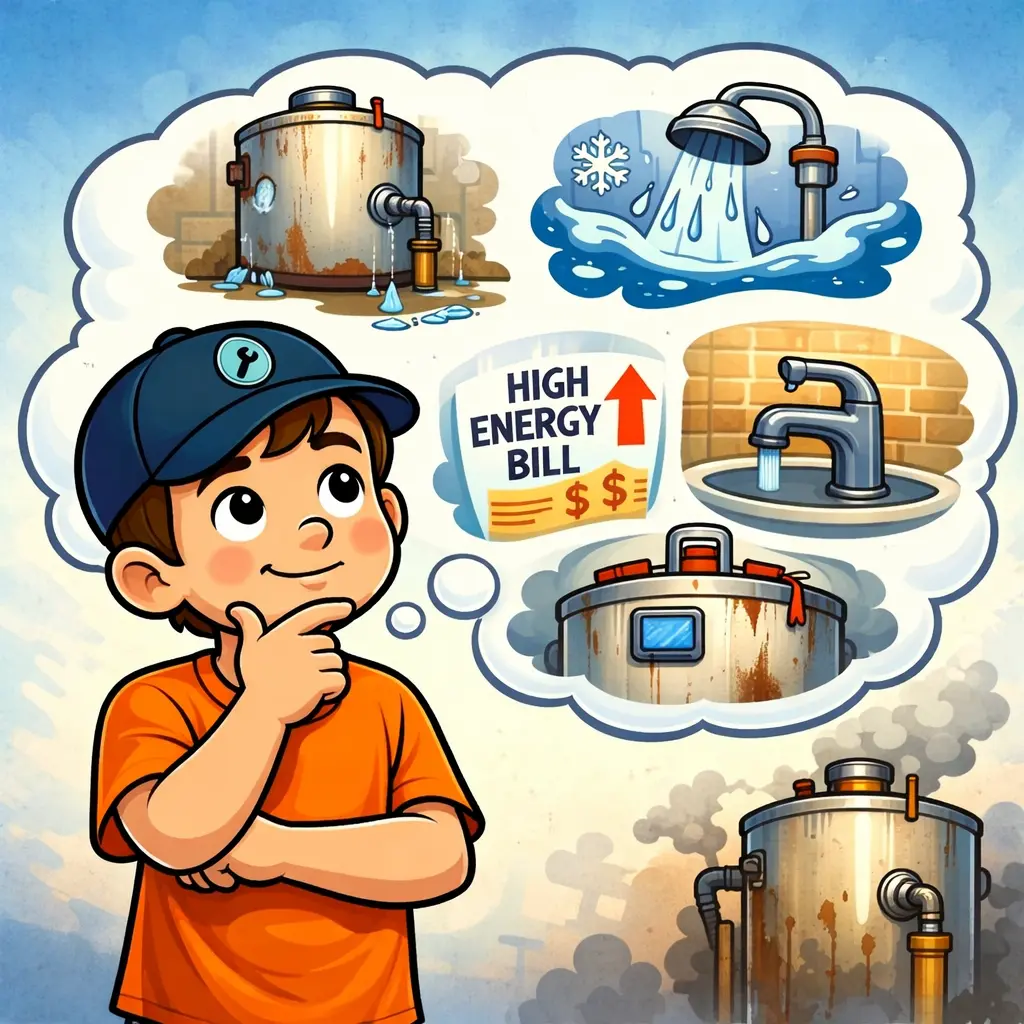
If your unit is older and you’re seeing multiple issues (temp swings, noise, rust-colored water), it may be smarter to replace than sink money into repeated repairs: How Long Does a Water Heater Last? and Signs You Need a New Water Heater.
What Not to Do
- Don’t ignore it just because it’s “only a drip.” Leaks usually get worse.
- Don’t crank the temperature up thinking it will help performance—this can increase risk.
- Don’t keep an electric heater powered if you suspect the tank is emptying or leaking heavily (heating elements can burn out).
- Don’t try to patch a leaking tank as a long-term fix—it’s not reliable.
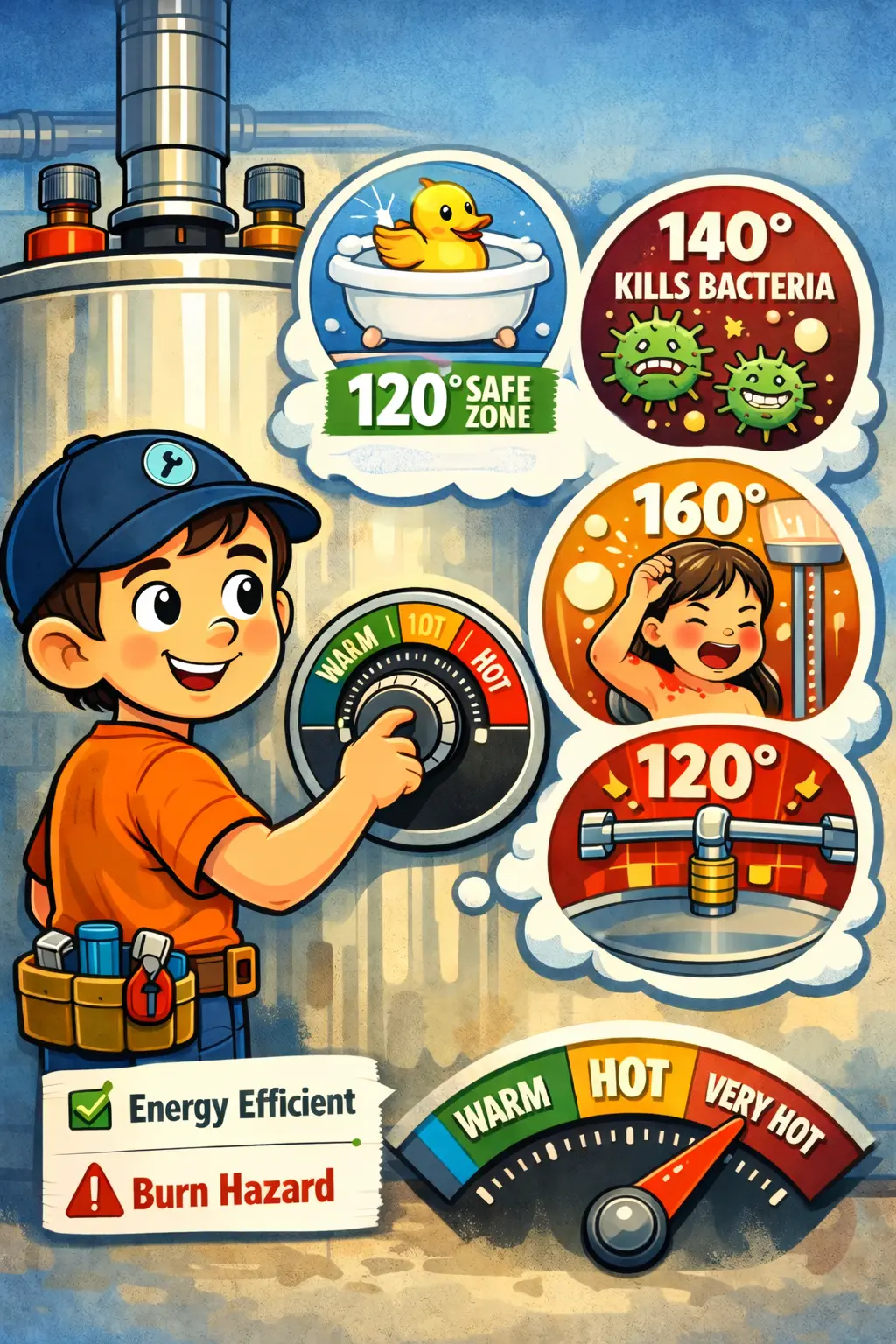
For safe temperature guidance, see: Water Heater Temperature Settings.
Next Steps (Emergency Planning + Service Links)
If you need immediate help in Clearwater, use: Emergency Plumbing in Clearwater. For broader coverage: Emergency Plumbing Near Me.
Related guides
- Repair vs Replacement
- Replacement Cost Factors
- Signs It’s Time to Replace
- How Long Does a Water Heater Last?
- Installation Checklist
- Water Heater Installation Guide