What Size Water Heater Do I Need? (Simple Sizing Guide + Quick Questions)
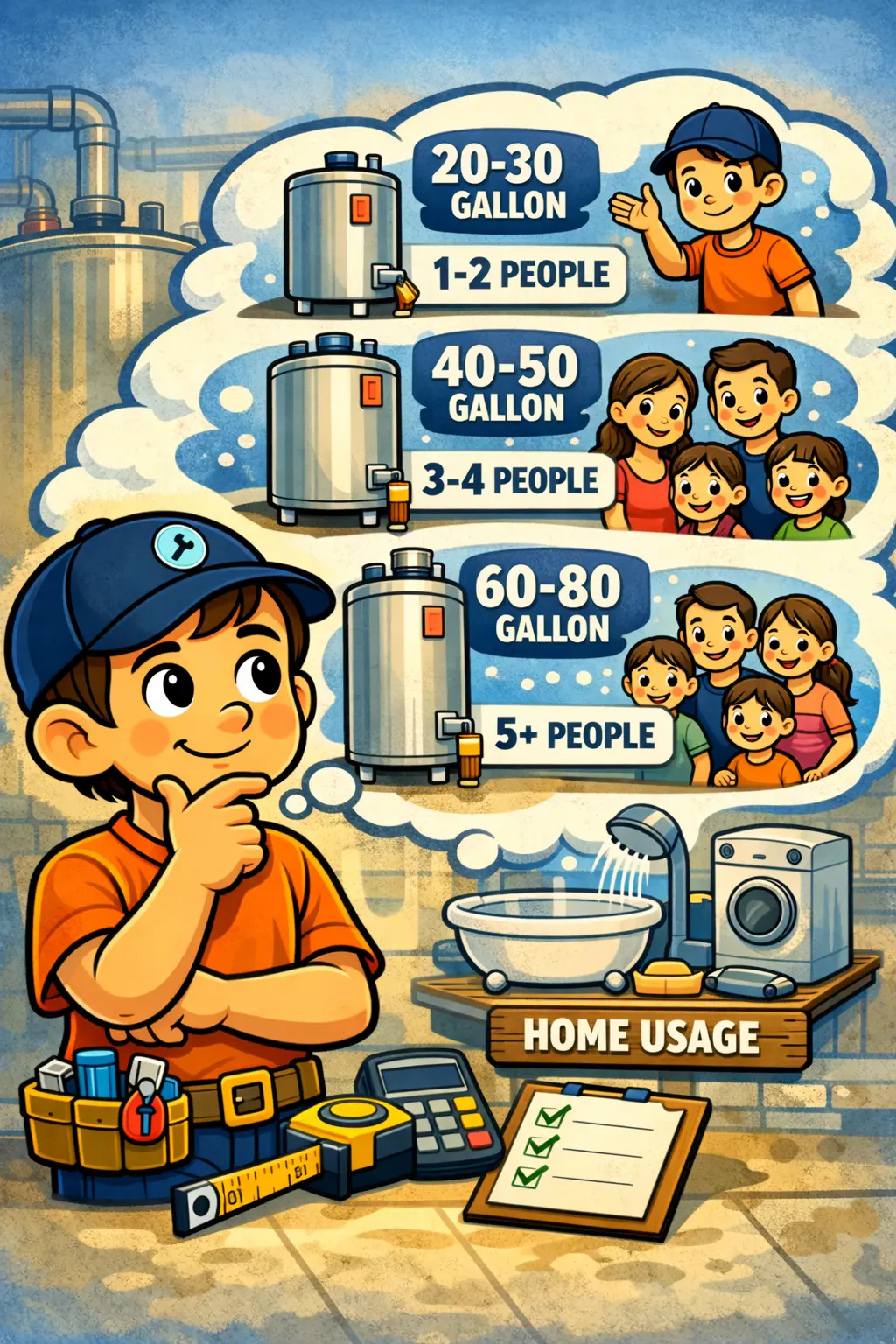
The right water heater size depends on two things: how many people use hot water and when they use it. A home with two people can still need a bigger tank if showers happen back-to-back, laundry runs during peak time, or you have upgraded fixtures.
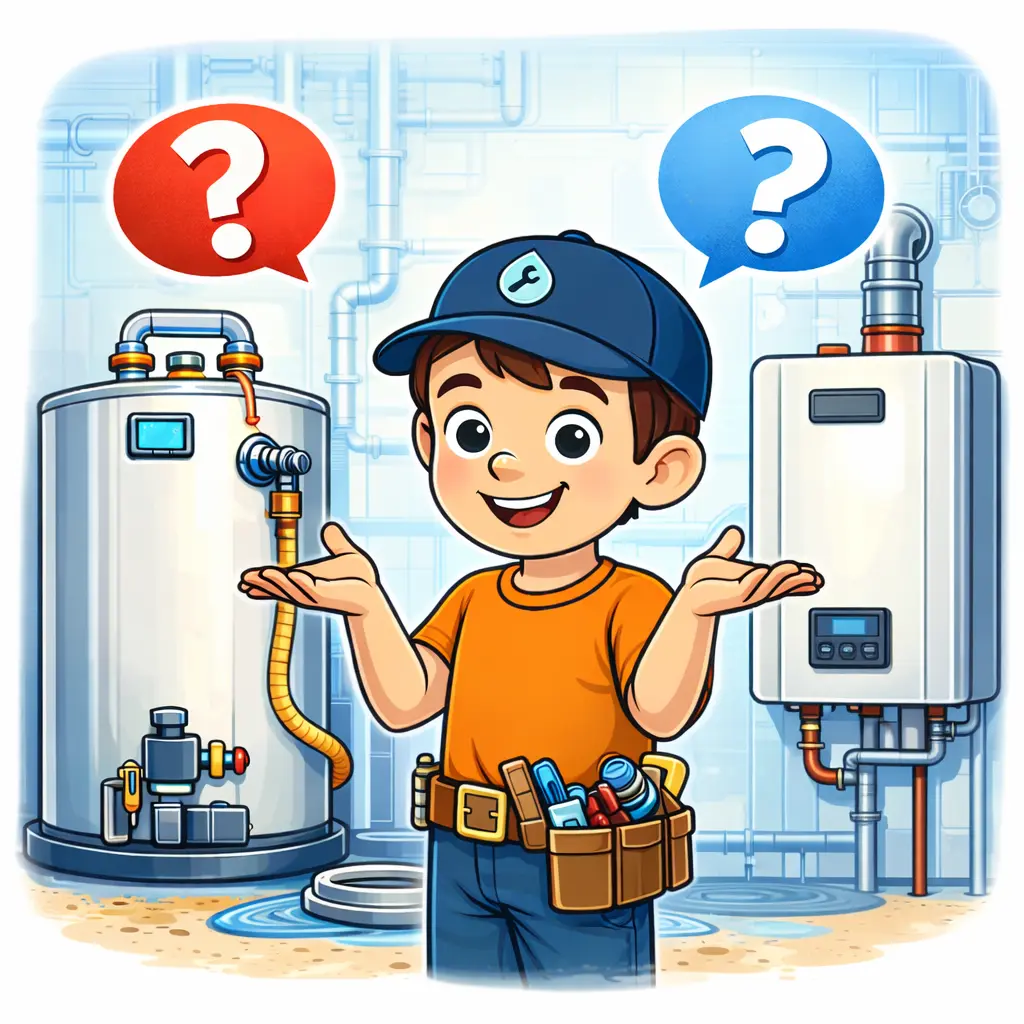
Below is a simple sizing guide, the key questions that prevent under-sizing, and a quick explanation of how tankless sizing works (because tankless is not “one size fits all”).
Quick sizing guide (tank units)
These are common starting ranges for many homes. The goal is to pick a size that matches your real morning and evening hot water demand—not just the number of people on paper.
- 1–2 people: often 30–40 gallons
- 2–3 people: often 40–50 gallons
- 3–5 people: often 50–80 gallons
- 5+ people or heavy usage: often 80 gallons or consider tankless
For a deeper sizing breakdown (including heavier-use scenarios), read: Water Heater Sizing Guide.
Questions that help you choose correctly
These questions matter because they reveal peak demand—the time of day you’re most likely to run out of hot water.
- Do showers happen back-to-back in the morning?
- Do you run laundry while someone showers?
- Do you have a large tub or upgraded fixtures (multi-head showers)?
- Do multiple people get ready at the same time?
- Do you often run the dishwasher while showers are happening?
If you answered “yes” to more than one of these, you usually want to size toward the higher end of your household range.
Why “peak usage” matters more than household size
Household size is a helpful starting point—but it doesn’t tell the full story. Two homes with the same number of people can need different heater sizes depending on habits and fixture types.
Example: a 3-person household with back-to-back showers plus laundry overlap can require a larger tank than a 5-person household that spreads out hot water use during the day.
If you’re considering tankless
Tankless sizing is different. It’s based on demand and flow—how many fixtures can run at once—plus the temperature rise needed (incoming water temp vs desired hot water).
Tankless sizing depends on
- How many hot water fixtures run at once (showers, sinks, laundry, dishwasher)
- Flow rate needs during peak time
- Incoming water temperature (how much the unit must raise it)
- Home compatibility (gas/electric capacity, venting, drains/condensate where applicable)
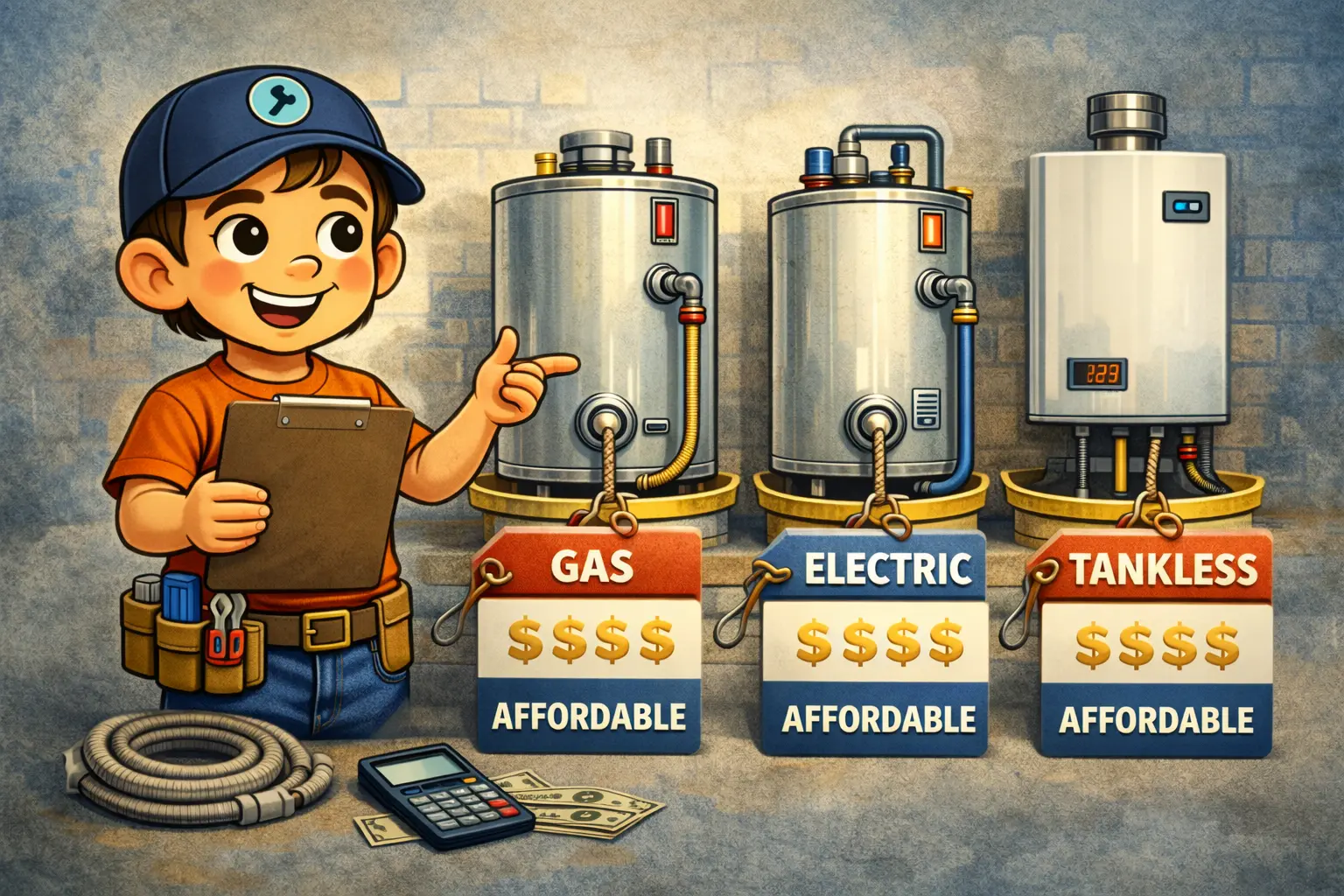
If you’re comparing options, start here: Tank vs Tankless Water Heater. If you want local tankless installation options, see: Tankless Water Heater Installation Near Me.
A properly sized unit matters more than the brand name. A “great brand” that’s undersized will still disappoint.
If you’re not sure (fastest way to check)
The simplest way to avoid guessing is to start with what you have now:
- Check the current tank size (gallons) on the unit label.
- Ask: does it keep up with your household at peak times?
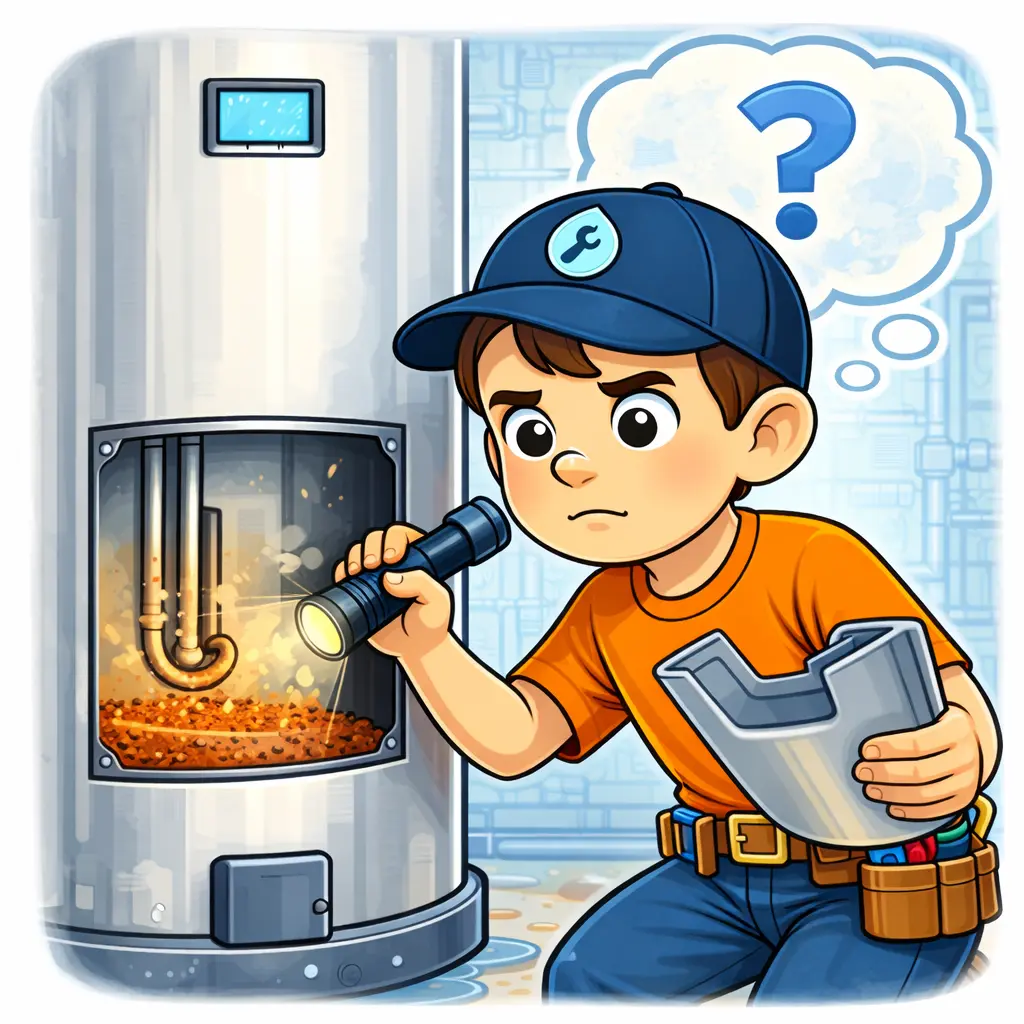
- If you run out of hot water, sizing (or sediment buildup) is often the real issue.
If your heater is struggling and also making noise or heating slowly, sediment may be part of the problem: Water Heater Sediment Symptoms.
Common sizing mistakes (and how to avoid them)
- Oversizing “just in case”: bigger tanks cost more upfront and can waste energy if you don’t need the capacity.
- Ignoring peak overlap: morning routines matter more than average daily use.
- Assuming tankless = unlimited: tankless can be very consistent, but it must be sized to your peak flow demand.
- Blaming temperature settings for low capacity: if you run out of hot water fast, it’s often sizing or sediment, not the thermostat setting alone. (See: Temperature Settings.)